Wednesday, June 15, 2016

City at World's End


The City At Worlds End by [Hamilton, Edmond]

As many of you are aware, audiobooks are not particularly my forte. I have a hard time focusing if I can't also follow along with the words, plus many narrators are terrible and should never have been chosen. If you can't articulate your words, don't narrate something, thankyouverymuch. Anyway, I've found that the free service LibriVox offers some fantastic recordings, though all of older books because they have to be public domain. I don't mind this because I have a thing for science fiction from the 1950's, and there's plenty to choose from there.

Recently, I chose to listen to The City at World's End by Edmond Hamilton, which was first published in 1951. It was actually a really great story, and I totally believe George Lucas's initial inspiration for Chewbacca came from a character in this book. It's glaringly obvious, in my humble opinion.

*****************************************

In the years following WWII, there is a fear of more atomic warfare, with whispers of superatomic power. On a sunny June morning in Middletown, Indiana, a superatomic bomb detonates over the city, but it doesn't cause the destruction that had been imagined. Instead, the scientists of the city soon realize they've been thrown into the future -- far, far into the future. The earth is much colder, the sun is much redder, and the constellations make no sense. What follows is a desperate attempt to survive, where thousands of people are frightened for their lives. The people find an empty domed city, and move the population there, and the main character, Kenneston, is able to repair a huge communications device and start sending out a signal, in hopes that there are other humans on earth.

When months later a sleek black spaceship drops out of the sky, not even the scientists whom Kenneston works with are ready to see people and creatures from beyond the solar system. But soon there is talk of evacuation, and the people from the past are desperate to stay on Earth. Kenneston takes matters into his own hands again and soon there's a hope for staying.

******************************************

Honestly, I can't give much more of a summary than that, because it's tough for me to remember character names when I can't see them haha. But really, this book was so cool and I enjoyed listening to it. The science isn't very accurate, obviously, but it doesn't have to be, and anyway it gets a serious pass because it was written before we knew much about space.

Thursday, June 2, 2016

The Secret Sky


Last week I decided I was going to read through my library's collection of YA lit, from the beginning. It's a rather daunting task, especially as I'm sure there's going to be more than a few that I hate. Also it will take me a long time, given that I won't only be reading YA. Anyway, I jumped in with both feet and grabbed the first two books on the shelf. The first one alphabetically being The Secret Sky: A Novel of Forbidden Love in Afghanistan, by Atia Abawi. It's one that I likely would have picked up even without my challenge. And I was not disappointed, though this book is not for the faint of heart. It tore me apart while I read it.

*******************************************

The Secret Sky is told from three viewpoints, Fatima, the girl, Samiullah, the boy, and Rashid, his cousin. It takes place in modern day Afghanistan, mostly in a tiny village. Fatima is a Hazara, a Shia, and Sami is a Pashtun, a Sunni. They've known each other their whole lives but of course as they grew, tradition dictated that they would never be allowed to see each other again. Sami was gone off to the madrassa with his cousin Rashid when the book opens, and he returns shortly. Turns out he was disgusted with the teachings there, and hopes for a better world. He and Fatima are so happy to see each other again, but with tradition and culture and religion bearing down on them, they can only meet secretly, which is also completely forbidden. But love grows despite everything, and they end up in a fight for their lives. Rashid is brainwashed by the teachings of the madrassa and he causes much grief for his cousin and Fatima, but not without essentially losing himself in the process.

*******************************************

Honestly, I don't usually like YA romance because it's all cliche and often way too promiscuous. This novel, however, broke my heart so soundly and I cried. It's not cliche, it's a triumph. It shows the dangers of Islam and how hard it is to live a normal life in the Middle East, particularly as a woman. The things that Fatima goes through...that her own family does to her, it's horrifying. There's death in this book, horrible, unnecessary death. There's so.much.hate. But you should read it. It will stick with you. And it should.

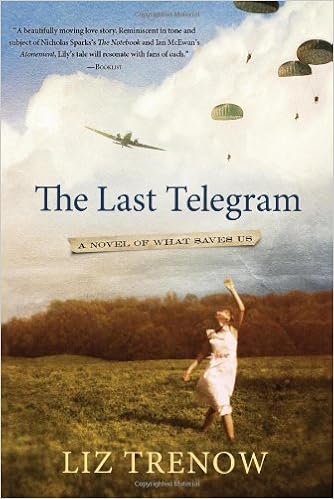
The Last Telegram


Wartime literature is an interesting thing. Especially what's been written to take place during WWII. It seems there's been so much written that we should be exhausted of topics and stories by now. But of course, there's always something else to be written, right? I hadn't read any novels set during WWI or WWII in quite some time, so when The Last Telegram came back to my library one of the times I was working, I thought I needed to read it. After all, it was set in Britain. I always go for books set in Britain. Though this is the first one I've read this year. (Branching out a bit more again haha.)

*****************************************

The book opens with an elderly Lily Verner burying her husband, and preparing herself to leave her childhood home she's lived in for her entire life. She has a conversation with her granddaughter that sparks off a chain of memories that sends her (and us) immediately back to a sultry July day in 1938. And that's when the story really begins. Eighteen year old Lily is feeling wild and free, but also cooped up and wants to get away from the life she's always known. She wants desperately to go to London. Of course, one things leads to another and she ends up apprenticing at her father's silk mill, that she never wanted to work at. Then the war begins and there's no way for her to leave. Around this time the Kindertransport is going on, and Lily's older brother John wants to help the kids. He and Lily go and pick out three teenage boys to come help them in the mill. Being German, this too ends up causing problems, especially when Lily and Stefan (the oldest) fall in love. When the war starts, Lily's father makes the decision that the mill will begin making parachute silk to stay in business throughout the war, and that causes many rumors to fly that there is sabotage...and it spirals even further from there.

****************************************

The Last Telegram is an artfully woven tale of love and loss, country loyalties, and the view of war in a young woman's eyes. It is also, in many ways, a showcase of the silk industry. The author, Liz Trenow, grew up in a silk milling family in Britain, which is why she knows so much about the industry. I found all the facts about silk absolutely fascinating, though others might not appreciate it as much. But honestly, this book was beautiful and very, very sad. It takes a lot for me to cry, and there were a few moments I was definitely ugly crying while reading this. And yet I couldn't put it down. I managed to not even realize how much time was passing one night and read for 3 1/2 hours into the middle of the night (until I finished the book) because I was so entranced.

It's not the best written book I've ever read, and there could probably have been more editing and also filling out because there are a few rather large jumps of time; it's not a long novel but it covers the time period of the entire war. But it's heartfelt, informative, and has a twist near the end that I honestly did not see coming. Definitely recommended. Also would be a good choice for a book club, especially as some editions have questions in the back already.

Wednesday, June 1, 2016

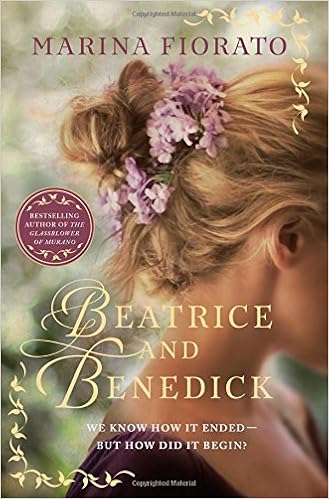
Beatrice and Benedick


One of my favorite Shakespeare plays is Much Ado About Nothing, particularly because my mom loves the movie from 1993 starring Kenneth Branagh and Emma Thompson (as well as many other well known actors!), and we've watched it often. So when I was exploring NoveList through my library's website (check your local library and see if they have access to this; it's amazing) and I saw Beatrice and Benedick as one of the recommendations under the criteria I had selected, I looked it up in our catalog immediately. We didn't have it, but one of the others in the system did so I requested it and waited excitedly.

It came in after the weekend and despite the fact that I'm also reading Anna Karenina on my Kindle, I started reading this. And I was in love right from the beginning. First, I was reading this in early April when it was still snowing regularly here in Wisconsin and the book takes place mostly on the island of Sicily in the Mediterranean. I was drinking in the descriptions of the white beaches and blue sea, and all the fresh fruit they ate. Marina Fiorato is actually Venetian but she did Sicily justice.

*******************************************

If you know anything about the plot of Shakespeare's original play, you will adore this novel. It begins a year before his play opens, when the first meeting of Beatrice and Benedick happens. So much of this first meeting parallels the second one, as they are both so full of themselves and full of wit that they won't admit they are attracted to one another. Each of the other main players are here too, Hero the young maiden, Claudio her would-be husband, Don Pedro the Spanish prince, etc, etc. But there is something sinister going on beneath the fun, and only Beatrice seems to notice initially, guided by a young poet named Michelangelo Florio Crollalanza, who has Moorish blood in him. Many terrible things happen in the year between the title couple's first and second meetings. There's much enmity between the Spanish and the Sicilians, especially on the part of the Moors, who are of a dark skin tone and not wanted, which culminates in the fiery death of one character.. Plus the Spanish are on the brink of their invasion of England across the Channel (which we know from history was an utter disaster). Benedick, to impress Beatrice and possibly win her heart, joins the Knights of St James under Don Pedro and ends up on the fateful journey to England.

*********************************************

Quite frankly, there is so much going on in this novel, I can't put it much better than that without giving away important plot points. A few direct Shakespeare related things, though, need to be pointed out. First, Beatrice is from near Verona, and it is implied that the tale of Romeo and Juliet is happening at the same time, and is intertwined in some ways, which had me squealing with delight as I realized it. Second, the final few chapters of the book are so wonderful because it's basically the play being told, with many lines word for word, in prose form, and it's one I know so well that it was a beautiful closing. Third, the character of Michelangelo Florio Crollalanza is fascinating. I had initially thought he was supposed to be a created character that "was" Shakespeare within his story. Turns out I wasn't completely wrong. Something I never knew is that there are a few scholars who believe that William Shakespeare was actually from Sicily, named Michelangelo Crollalanza and that after certain events he fled to England and changed his name. Crolla-lanza literally means shake-speare. This theory isn't given a whole lot of credence, but it's certainly fascinating, especially in light of how he did set some plays in Italy.

So I loved the book and am looking forward to reading Fiorato's other novels, though they are not Shakespeare retellings. I encourage you to read this book. It makes you think, and is a fantastic tribute to the Bard.


Friday, May 6, 2016

Catch up reviews from 2015

It appears I did not finish my reviews for Reading England 2015, nor write the reviews for the few other books I have read in the last year! Life has been...interesting, to say the least. But it's finally getting to a point where I have (mostly) figured out how to juggle all the things I want/need to be doing. Plus I am actually reading more often again, making the time for it in ways I regret I did not for awhile. It helps that I'm working at a public library again. It's definitely not the same as Bloomington, but it's better than nothing!

So.

Without further ado.

I have a few things to catch you up on, because I really do refuse to leave out any books.


EDIT: So apparently I hit publish on this post without finishing it. Or maybe Blogger did it for me. I dunno. Whatevs I guess. I'm finishing it now!

******************************

As I mentioned above, I didn't read as much as I would have liked last year; in fact, I've already read more books this year than I did over the course of last year. That's sad. I did write a full review of Far From the Madding Crowd which you can find here. For the rest of my Reading England challenge, I read Nicholas Nickleby by Charles Dickens and Cranford by Elizabeth Gaskell. I also took breaks (mostly during my reading of Dickens because Nickleby is ridiculously long) to read a Japanese novel called The Sound of Waves by Yukio Mishima, and an Italian novel called Invisible Cities by Italo Calvino. Both those authors I had read books by previously.

Nicholas Nickleby by Charles Dickens 
     Honestly, this book was super difficult to get into and took me nearly six months to read because I was bored to tears for most of the first half. There's a reason I haven't completed many Dickens novels, as much as I do like his stories. But by the second half, things made more sense and there weren't as many new characters introduced every other page. And I'm glad I read it, because it had a very, very satisfying ending. And Dickens does understand sinful human nature rather well, which is something I greatly appreciate in an author, and also something I think tends to catapult a book to classic status. Understanding the human condition is a pretty big deal. So yeah, I'd recommend it, and I suppose it's a fairly decent starter Dickens, though I'd probably tell you to read A Christmas Carol or Oliver Twist first.

Cranford by Elizabeth Gaskell
     Gaskell is an author I've intended to read for ages, but of course had never gotten around to it. There's a miniseries of Cranford starring Judi Dench, and I have resolutely refused to watch that until I had read the book. Now that I read the book last December, I can watch the show, but haven't made the time for it yet. Anyway, I don't know why I waited so long to read Cranford because it was fairly short (especially after Dickens) and so funny. I mean there were serious moments in it too, but basically the story revolves around the town of Cranford that is mostly ladies and they spend all their time together and when anything happens or there happen to be more men around, things get amusing really fast. It was a cute story, and I intend to read some of Gaskell's other works that are also set in the same area. Note, it's a tad hard to read at first, because the narrator is a character in the story but the tense doesn't always stay the same. Or the grammar is just off.

The Sound of Waves by Yukio Mishima
     This was probably my favorite novel I read last year, with the possible exception of Far From the Madding Crowd. Set in a tiny fishing village in Japan in the 1950s (I believe), this novel tells the story of Shinji and Hatsue and their young love. Shinji is a fisherman-in-training and Hatsue is the daughter of the richest family in the village. She is also training to be a pearl diver. I already knew Mishima had lyrical writing, even translated into English, from reading Spring Snow, but this book had me so perfectly transported across the world and back in time. I learned much about fishing, pearl diving, mountain shrines, and how love is viewed in rural Japan. It was beautiful and I probably read it in two hours. I'll read it again, I'm positive of that.

Invisible Cities by Italo Calvino
     Going into this novel I fully expected it to be a trip, because If On a Winter's Night a Traveler  definitely was. But this was more than a trip. It was poetry and a novel and a dream all at the same time. It was what my dreams of wanderlust are made of. It was beautiful. The premise is that Marco Polo is telling Kublai Khan of his travels, and each section takes you deeper and deeper until realize...well, I'm not going to tell you. You'll just have to read it yourself. Also, I fully believe Calvino was inspired in part by Samuel Taylor Coleridge's poem Kubla Khan. Incidentally, I adore that poem. So yeah, fantastic reading. Calvino is another one of those whose words have been translated so well into English. Just makes me long to read the original Italian, though.

****************************

And there you have it, the books I read in 2015. There will be more reviews this year, and most of them shall have their own posts!

Tuesday, August 11, 2015

Top Ten Tuesday: Authors I've Read the Most Books From

 brokeandbookish.com
brokeandbookish.com

I wish I could spend the entire summer reading like I used to do, but it is what it is. Soon I will have a book update post for you, but since it is Tuesday, I will participate in Top Ten Tuesday again. This week's meme/list is to list the authors from whom you have read the most. Considering that I've read a bunch of longer series...I feel like that's cheating, but ehhh.

1. Carolyn Keene (60+ books)
     This isn't really a fair choice because I am not entirely sure Carolyn Keane was even a real person, but the simple fact remains that I read every single one of the original Nancy Drew books and then some.

2. Lemony Snicket (13 books)
     Just last summer I read the entirety of A Series of Unfortunate Events, so I would be remiss if I did not include Snicket.

3. J.R.R. Tolkien (8 books, I think)
     Really, The Lord of the Rings should count as only one book, but it doesn't to most people.

4. C.S. Lewis (11 books)
     I love Lewis. So much. I've read The Chronicles of Narnia more times in my life than I've read any other book. Plus his Space Trilogy is incredible. And his nonfiction. He's just amazing.

5. L.M. Montgomery (22 books)
     After falling deeply in love with her Anne of Green Gables series, my younger self read every other book by L.M. Montgomery I could find. She wrote more than I ever expected; my two favorite novels of hers, outside of the Anne books, are Magic for Marigold and Kilmeny of the Orchard.

6. Maud Hart Lovelace (14 books)
     Another series I fell deeply in love with when I was young was Betsy-Tacy. I have a serious thing for Victorian era books. And authors who could write about everyday things with such imagination.

7. Louisa May Alcott (10 books)
     I'm certain you are seeing a pattern here for authors that I've read the most. It helps that Louisa May Alcott and I share a birthday (as well as C.S. Lewis!). But how can you not like Little Women? I think my favorite of her books is Jack and Jill, though.

8. Brian Jacques (25 books)
     I will never forget my introduction to the creatures of Redwall Abbey. So many tears were shed over these books. And tears were shed again when Jacques passed away four years ago. He was brilliant and I wish he could still be writing.

9. L. Frank Baum (14 books)
     When I first went to find the original book The Wizard of Oz, I had absolutely no idea that Baum had written a whole series. Fourteen books later, I was way beyond obsessed. I love Oz, and not the Oz that the movie portrays. The book Oz is much more magical. Also there are other authors who have written more Oz books and I read most of those too; upwards of fifty books.

10. Lois Gladys Leppard (35+ books)
     Am I cheating by putting series here? I feel like I'm cheating. But anyway, I've read (I think) all of the Mandie mysteries. I ate these up as a kid, and I still remember a lot of the storylines. I am considering revisiting them since I know they aren't that long.

*************************************************************

There are other authors whose books could be on this list, like J.K. Rowling and Jude Watson (author of the Jedi Apprentice and Jedi Quest series, which I loved, like, a LOT), but we will stop there because I hit ten. What authors have you read the most books from? Do you notice a pattern in the books you've read?

Thursday, April 16, 2015

Far From the Madding Crowd

Amazon.com

Ah, Thomas Hardy. Your prose flows so well that it's obvious to me why your works have stood the test of time. Far From the Madding Crowd was no exception. Well, I've only read one other novel by you, so I suppose I can't be the best judge. But I shall remedy that, perhaps next year. Anyway, the tale of Bathsheba Everdene and the men who (try to) court her is a rather timeless one.

In Thomas Hardy’s first major literary success, independent and spirited Bathsheba Everdene has come to Weatherbury to take up her position as a farmer on the largest estate in the area. Her bold presence draws three very different suitors: the gentleman-farmer Boldwood, the soldier-seducer Sergeant Troy, and the devoted shepherd Gabriel Oak. Each, in contrasting ways, unsettles her decisions and complicates her life, and tragedy ensues, threatening the stability of the whole community. One of his first works set in the semi-fictional region of Wessex, Hardy’s novel of swift passion and slow courtship is imbued with his evocative descriptions of rural life and landscapes, and with unflinching honesty about sexual relationships. (From Amazon.com)

************************************************

I do not like to give much more than a summary-blurb in my reviews, because spoilers are no one's friend, which is why this time I used the Amazon description. But I have to touch on how easy to read this novel was. Yes, it took me a couple months, but that's only because I was reading it along with my friend and her mother so we had to take our time to stay together! There are many Great English Novels that are difficult to get into, but this is not one of them. And even with the dialogue, once I began reading it (in my head of course) in the accent Hardy was illustrating, it became even easier to understand. And his depictions of country life! Ah, how beautiful. Very pastoral.

This is a book I will have to revisit someday. There is also a film coming out this year, starring Carey Mulligan, who I like very much. I can imagine it won't be exactly like the book, but it's going to be a lush period drama of one of my new favorite novels so I seriously cannot wait.

Far from the Madding Crowd (2015) Poster

*************************************************

Far From the Madding Crowd is definitely a five star novel. No ifs, ands, or buts. I mean, I'm biased towards English literature, but everything about it was just perfect.